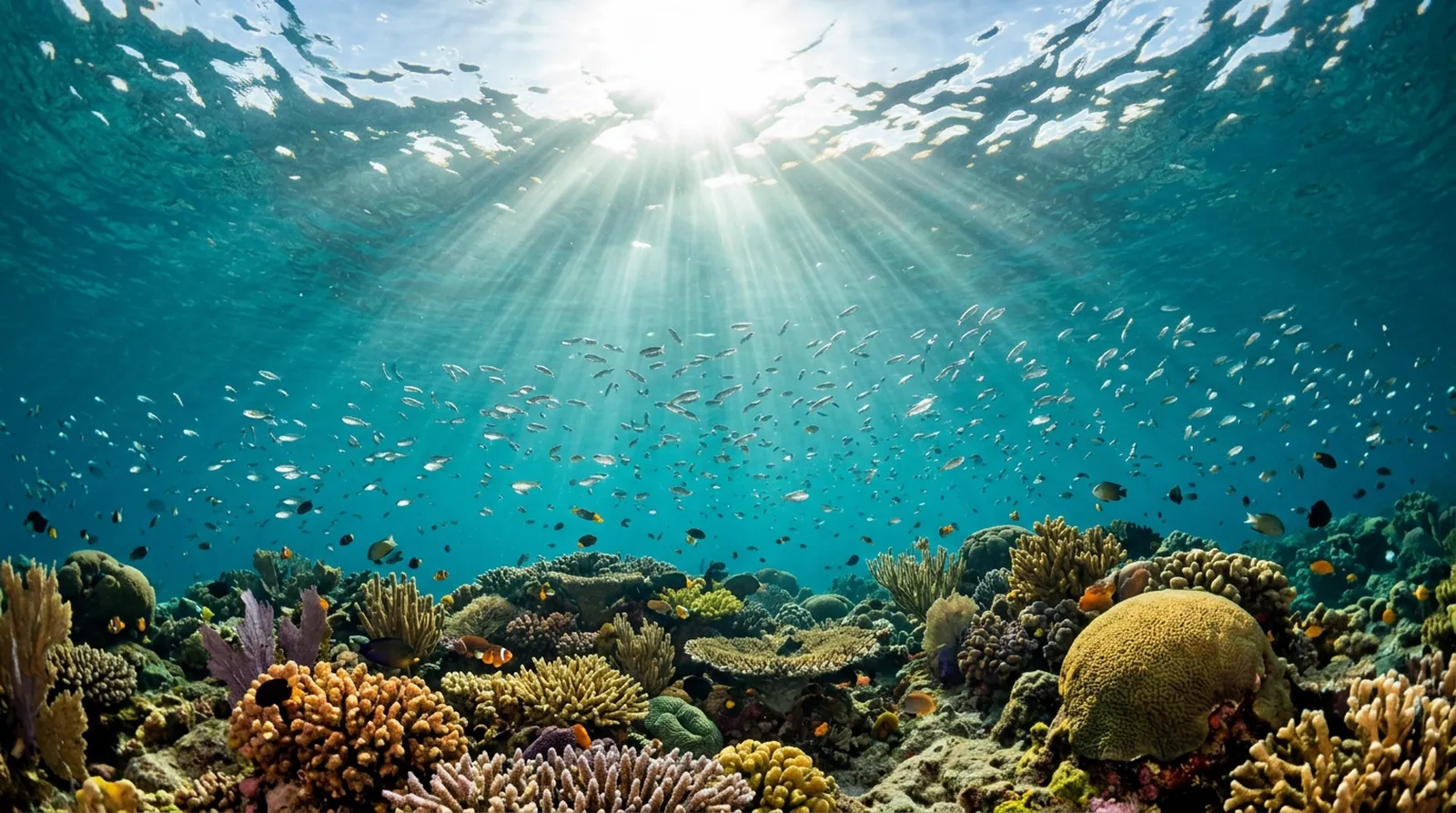
Coral reef health is influenced by a complex interaction of biological and environmental factors. To build a complete picture of reef condition, the Coral Ecology Program combines four complementary research areas.
Coral Health & Bleaching
Regular surveys are conducted along permanent monitoring transects to assess coral cover, health, bleaching prevalence, and mortality. During periods of elevated sea temperatures, survey frequency increases to track bleaching events and recovery in near real-time. Participants learn coral identification and ecological survey techniques while collecting data using CoralWatch methodologies. Data collected through these surveys are shared with CoralWatch and contribute to broader efforts to understand coral bleaching patterns and reef resilience. Bleaching observations are also used alongside environmental monitoring data to support coral reef monitoring initiatives led by National Oceanic and Atmospheric Administration (NOAA).
Environmental Monitoring
Water temperature is one of the most important factors influencing coral reef health.
Temperature loggers deployed at multiple depths continuously record seawater temperatures throughout the year, allowing us to identify seasonal trends, thermal stress events, and environmental conditions experienced by local reefs.
Participants assist with logger deployment, maintenance, and data management while gaining practical experience in environmental monitoring. These datasets provide important context for interpreting bleaching observations and understanding how local reefs respond to changing ocean conditions.
Reef Photogrammetry
Using underwater photography, we create detailed two-dimensional models of coral reef habitats that allow changes in reef structure to be monitored over time.
Participants help collect high-resolution image datasets that are processed into digital reef models.
Photogrammetry surveys are conducted in collaboration with National Oceanic and Atmospheric Administration (NOAA), contributing to efforts to improve understanding of reef condition, habitat complexity, and ecological change across coral reef ecosystems. These models provide a permanent visual record of reef condition and support both research and conservation planning.
Coral Spawning
Coral spawning is one of the most important processes supporting reef recovery and resilience. Throughout the year, we monitor coral colonies for signs of reproductive activity and conduct spawning observations around predicted spawning periods.
Participants may assist with colony monitoring, spawning observations, and photographic documentation of spawning events. Records collected through the program contribute to a growing understanding of coral reproductive timing in Raja Ampat and are shared with COSMARINDO (Coral Spawning Monitoring and Awareness for Restoration Network Indonesia), an Indonesian initiative that brings together researchers and coral reef practitioners to improve understanding of coral spawning patterns and support non-invasive reef restoration efforts.